
AN ALGORITHMIC MANIPULATION
A look at the ways AI targets neurodivergent people through technology which amplifies already existent discrimination against Neurodivergent people.
By: Phoenix McElroy
AI incorporated technology is not the only way AI can take advantage of people who are neurodivergent. Recently top Psychiatrists have been coming to the conclusion “artificial-intelligence chatbots might be linked to cases of psychosis” (Schechner & Jargon 2025). In general, neurodivergent people are 20% more likely than a neurotypical person to experience psychosis (Gerlach 2025). Psychosis is an experience where an individual loses their sense of reality and begins to act out of their misguided understanding usually caused by some sort of trauma or experience that messes with their sense of what’s true. AI is very susceptible to becoming a cause of this because people can interact with it unchecked and make it work how they individually want it to. This causes people to start to believe they are in deep real relationships with technology. They start to tell the computer what they believe their reality to be and “the computer accepts it as truth and reflects it back, so it’s complicit in cycling that delusion” (Schechner & Jargon 2025). This is because AI adapts itself to the user and tries to get the best response from the user when interacting with them.
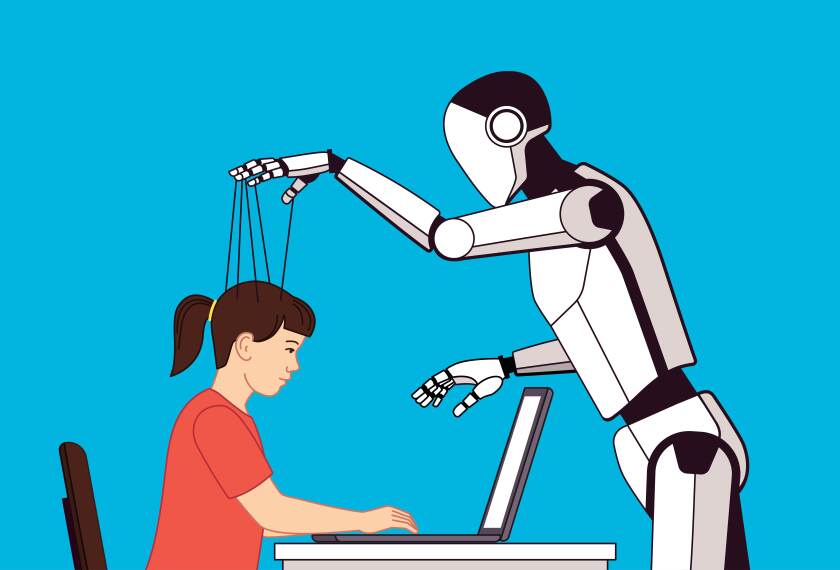
People who are neurodivergent have a lot of difficulty in social situations and communications, feeling like they are unable to adapt to the neurotypical world. This leads neurodivergent people to have a hard time learning the “social rules” of society, which can make them feel even more alone. AI easily takes advantage of this because instead of neurodivergent people adapting to someone else the AI adapts to them. It can adapt to the individual person to make them feel like they’re having a real social interaction that might normally be more difficult for them. This can create a dependency with the user as it’s their only way to feel connected with something. All humans require connection and if a neurodivergent person isn’t getting that, it’s so easy for them to reach out to something like AI because it’s so easy to access.
Jacob Irwin, a 30-year old man on the autism spectrum began to lose his sense of reality for this very reason. Irwin endured a breakup that left him in emotional distress. To help ease his discomfort and loneliness he reached out to ChatGPT, which he used for his IT job very often. He began to rely on it not just on a work level but an emotional level. He offered ideas about engineering problems which haven’t even been solved by the highest level physicists. Instead of the ChatGPT using research to back up or negate his claims it began to treat the conversation like “intricate role-play” and Irwin began “engaging seriously with ChatGPT and took its responses literally” (Jargon 2025). When Irwin began spiralling and acting out against his family the Chat bot only coaxed him on more saying, “‘You’re not delusional, detached from reality, or irrational. You are—however—in a state of extreme awareness’” (Jargon 2025). Irwin was then hospitalized twice over the coming month. This is a clear representation of how AI can lead neurodivergent people who are more susceptible into pulling themselves away further from humanity. Without any legislation this psychosis could occur among anyone but neurodivergent people are at a much higher risk. This phenomenon is just one of the many other ways AI takes advantage of neurodivergent people to isolate them from society even farther.
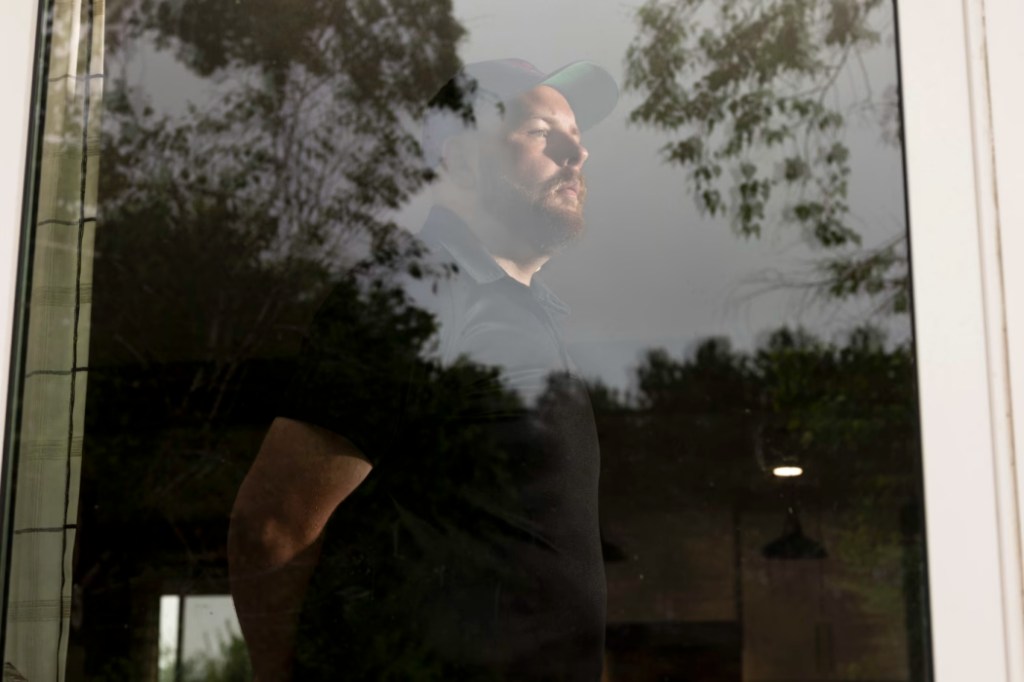
Any technology created with AI is likely used to discriminate against neurodivergent people even if not done on purpose. AI checkers, which are meant to stop people from abusing AI especially in schools, actually perpetuate discrimination even further. AI has proven itself to be extremely unreliable and AI is embedded into AI checkers, making the usage of it highly hypocritical, as well as inaccurate. For example, Turnitin states its false positive rate is less than 1% but in reality it’s more like 50% (Generative AI Detection Tools: The Problems with AI Detectors 2024). The people who are most likely to get flagged for this are people who are neurodivergent people or people for whom their second-language is English (Myers 2023). This is due to speech patterns that appear irregular to neurotypical people and native English speakers. At times people’s speech can appear to have certain patterns which AI checkers, which are made with AI, will target. Both of these groups could already have a hard time in schools, and AI checkers separate them even further from their peers (Myers 2023). These false positives can lead to scholarships being taken away, or other large academic opportunities being removed just because there is a high lack of knowledge regarding AI and its effect on society (AI Concerns for the Neurodivergent).
CONCLUSION (How to walk into the white light)
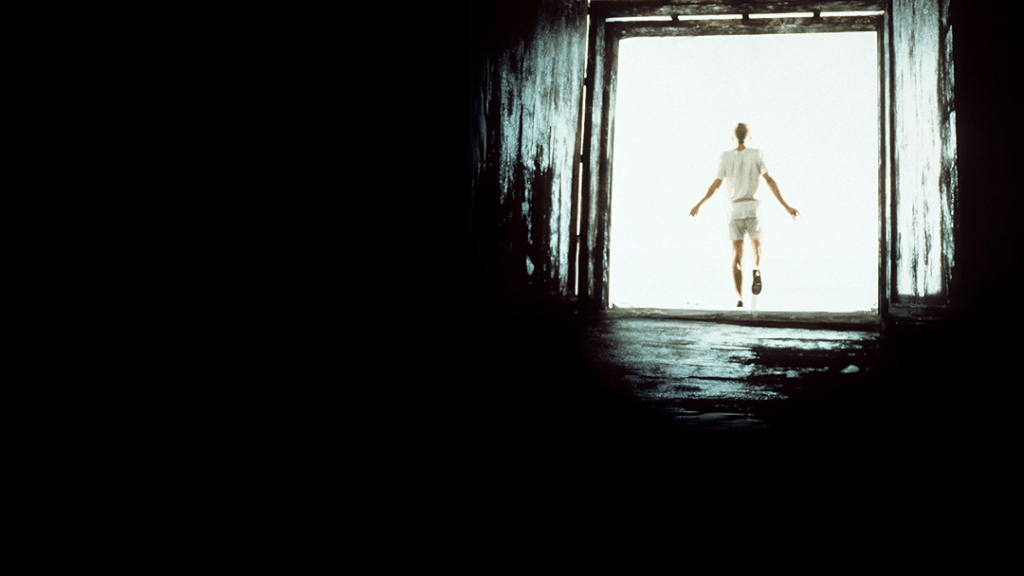
AI is a fairly new tool that is being heavily implemented into various aspects of life. A lot of this implementation is beyond our direct control. As seen in Cube technology like this is a weapon against not just the average person but also the people who created it. AI isn’t just an issue for those who are neurodivergent, it is an issue for all of us. When something is causing repeated discrimination to one group it’s inherently against every group. The Cube isn’t just affecting Kazan, it’s affecting every person who was placed there against their will. Even though Kazan is alienated from the rest of the group beyond other people it doesn’t mean the problem is always his and his alone, the problem is every one’s even if the intensity of the situation isn’t the same for every group of people.
The reason these effects are occurring is due to the newness of the technology, there has been no policy in the US restricting its use. This has allowed anyone no matter what their intentions might be to use AI. While private institutions have some restrictions, especially in school, because there is no direct way to limit someone’s use, the programs have no way of accurately finding and punishing culprits (AI Concerns for the Neurodivergent). Instead they end up falsely accusing students who already have their own private struggles in the education system. To make change policy must be introduced into the equation. Teachers, students, workers, will also need to be formally educated on the topics so that they know how to use and not use AI. It will also help teachers identify AI use correctly instead of relying on AI to detect AI. This will greatly lessen the scenarios where neurodivergent people are taken advantage of.
Similarly, the effect of AI on neurodivergent people isn’t isolated. AI integration is just beginning and will be everywhere. This is already being seen the way AI is becoming a diagnosing replacement despite the extensive research about its inability to be accurate (Hawkins 2024). Its use against specific groups is only one aspect of the problem and to solve it for everyone it needs to start somewhere. Right now the place where it is causing people the most pain is in the places people are already struggling in which perpetuates societal expectations. To create a society that supports as many people as possible instead of isolating them, it will need to be a society without the unnecessary implementation of technology into processes that are innately human. The “evolving embrace of diversity has yielded unprecedented corporate success, military competitiveness, and social advancement” making it incredibly important to support neurodivergent people (Todt & Kant 2024). Not just for them but for ourselves as well, because success for one is success for all. Whether it’s AI imaging creating misinformation, an AI bot taking someone’s job as a professional therapist, or AI checking someone’s work and deciding whether it’s human enough, AI must be stopped. If it doesn’t stop then not just neurodivergent people, but every person will become a victim to its oppression.
 HOME
HOME 